
Training Read at source ↗Why Promoting the Best Technician or Pilot to Instructor Often Fails, and Five Skills That Close the Gap
 40º West Pitches Airline Training Software That Feeds Flight Data Back Into Simulator Scenarios
 New SCOPE Workshop and EATS Maintenance Stream Tackle How to Train More Engineers Without Cutting Safety CornersEASA Folds New Simulator Rules and Task-to-Tool Provisions Into Its October Aircrew Rulebook
Keeping Flight Instructors Standardised Is Harder Than Setting the Standard, Australian Training Chief Argues
Source: Halldale· 26 Oct 2026
Halldale
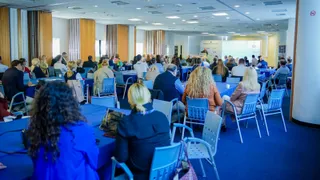
Harrison Stanhope, chief operating officer of Australia's Basair Aviation College, presented in the ATO stream at APATS 2026 on why instructor standardisation is easier to build than to sustain. He says organisations can standardise content, sequence, agreed language and standards, but should not script every word an educator says or strip out professional judgement. His four foundations are regulatory alignment, sequence and syllabus, embedded instructional design, and a shared professional language. To show the scale involved, he cites CASA's Part 142 commercial pilot syllabus: seven exams, 150 hours of total experience, 21 competencies, 79 elements and 441 performance criteria. Feedback, he argues, is the hardest area to standardise, and inconsistent feedback can leave students trained to different levels. He recommends agreeing terminology and how feedback and assessment are measured, with instructor-level and course-level failure data included, and suggests that standardisation be a shared responsibility in the way safety is. His closing point is that maintaining and improving standardisation matters more than setting its foundations.
Basair Aviation College's COO told APATS 2026 that maintaining instructor consistency over time is the real challenge. He names feedback as the hardest element to standardise and says failure data should be tracked per instructor and per course.
Original reporting
Halldale
Related in Training
Training
A guest article drawn from a cabin-crew stream talk at WATS 2026 argues that technical expertise and teaching ability are different skills. It sets out five instructor competencies and three steps for selecting and developing instructors.
27 Oct 2026 · 1 min read
Source: Halldale· Debbie Curl-Nagy
Training
The Spanish-linked vendor's CEO says its training management system is tailored to each airline's own processes and was rolled out at Air Europa over a year. He also warns that CBTA adoption hinges on standardising instructors' assessment judgement.
26 Oct 2026 · 1 min read
Source: Halldale· Emma Vandore
Training
Halldale and T-C-Alliance are launching SCOPE, a two-day implementation workshop before EATS 2026, while the maintenance stream covers competency-based and digital CBTA delivery. Part-IS is the worked example for fitting new rules into training.
19 Oct 2026 · 1 min read
Source: Halldale· Emma Vandore
Training
EASA has issued an October 2026 revision of its consolidated Aircrew rules, incorporating amended requirements for flight simulation training devices and new material on devices carrying a capability signature. A gyroplane licensing decision is also included.
16 Oct 2026 · 1 min read
Source: EASA
Latest in Training
01
02
03