
TrainingRead at source ↗ New SCOPE Workshop and EATS Maintenance Stream Tackle How to Train More Engineers Without Cutting Safety CornersEASA Folds New Simulator Rules and Task-to-Tool Provisions Into Its October Aircrew Rulebook
 Survey of European Training Leaders: AI Interest Centres on EBT and CBTA Assessment, but Few Projects Have Named Sponsors
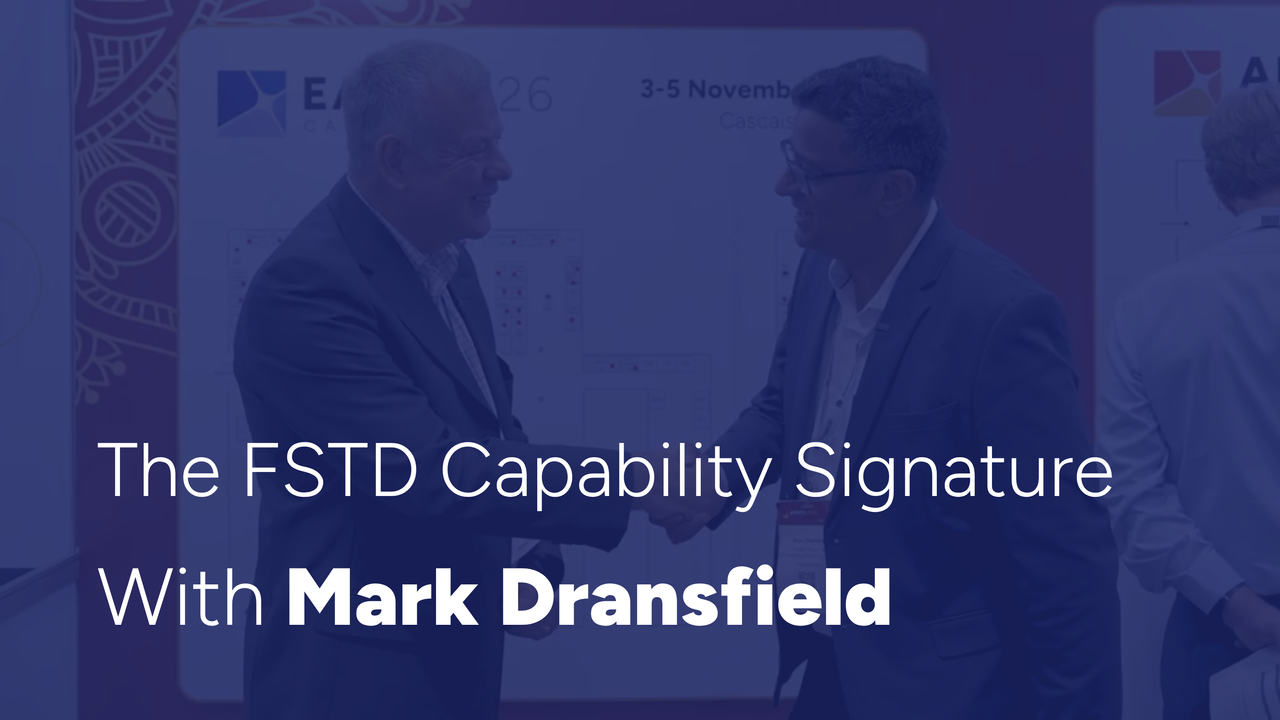 EASA's Simulator Capability Signature Gets a Panel Slot as a Bridge to CBTA and EBT
Training Chiefs Question Whether Every Lesson Needs a Full-Flight Simulator
Patrick Davis, vice president and general manager of airline training at Acron Aviation, is pushing airlines to rethink how much pilot instruction actually requires a full-flight simulator, devices that can cost between $10 million and $25 million depending on aircraft type. As he put it, "there's a lot of what we currently do in training a pilot that doesn't need all of that technology." He argues a meaningful share of current training tasks could move to lower-cost training devices without compromising safety, freeing the full-flight simulator for exercises that genuinely need its fidelity. Davis estimates that shifting just five sessions per course to alternative equipment could produce a noticeable reduction in per-pilot training spend. The argument lands as EASA works through a new flight simulation training device framework, adopted in 2026 and due to take effect in early 2028, which matches specific training tasks to the minimum device capability required rather than defaulting to the highest-fidelity option. Davis contrasts this with Asia-Pacific, where a patchwork of national aviation authority rules makes it harder for training providers to apply a single device strategy across markets, unlike Europe's unified EASA framework. He points to IATA's Operational Safety Audit as a possible model for harmonizing simulator-device rules internationally. The stakes are significant given the roughly two years it takes to train a new pilot and forecasts of sustained pilot-shortage pressure as Asia-Pacific carriers expand capacity, leaving training organizations searching for ways to add throughput without inflating costs or cutting corners on safety.
An Acron Aviation training executive argues airlines could cut costs by shifting some pilot-training tasks off full-flight simulators, as EASA prepares a new device framework that matches training tasks to minimum-required device capability. The debate is sharpened by fragmented Asia-Pacific regulation and a widening regional pilot shortage.
Original reporting
Halldale · Emma Vandore
Related in Training
Training
Halldale and T-C-Alliance are launching SCOPE, a two-day implementation workshop before EATS 2026, while the maintenance stream covers competency-based and digital CBTA delivery. Part-IS is the worked example for fitting new rules into training.
19 Oct 2026 · 1 min read
Source: Halldale· Emma Vandore
Training
EASA has issued an October 2026 revision of its consolidated Aircrew rules, incorporating amended requirements for flight simulation training devices and new material on devices carrying a capability signature. A gyroplane licensing decision is also included.
16 Oct 2026 · 1 min read
Source: EASA
Training
An Amris Aviation and Halldale report finds 44% of AI initiatives in aviation training target competency assessment and performance analytics under EBT and CBTA. Governance lags: 89% plan human override, yet under half have a named business sponsor.
15 Oct 2026 · 1 min read
Source: Halldale
Training
An APATS interview with consultant Mark Dransfield previews a EATS 2026 session on EASA's FSTD Capability Signature. It would qualify simulators by the tasks they can support rather than by fixed device labels, starting in 2028.
13 Oct 2026 · 1 min read
Source: Halldale Group
Latest in Training
01
02