
TrainingRead at source ↗ New SCOPE Workshop and EATS Maintenance Stream Tackle How to Train More Engineers Without Cutting Safety CornersEASA Folds New Simulator Rules and Task-to-Tool Provisions Into Its October Aircrew Rulebook
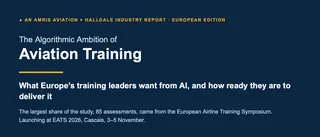 Survey of European Training Leaders: AI Interest Centres on EBT and CBTA Assessment, but Few Projects Have Named Sponsors
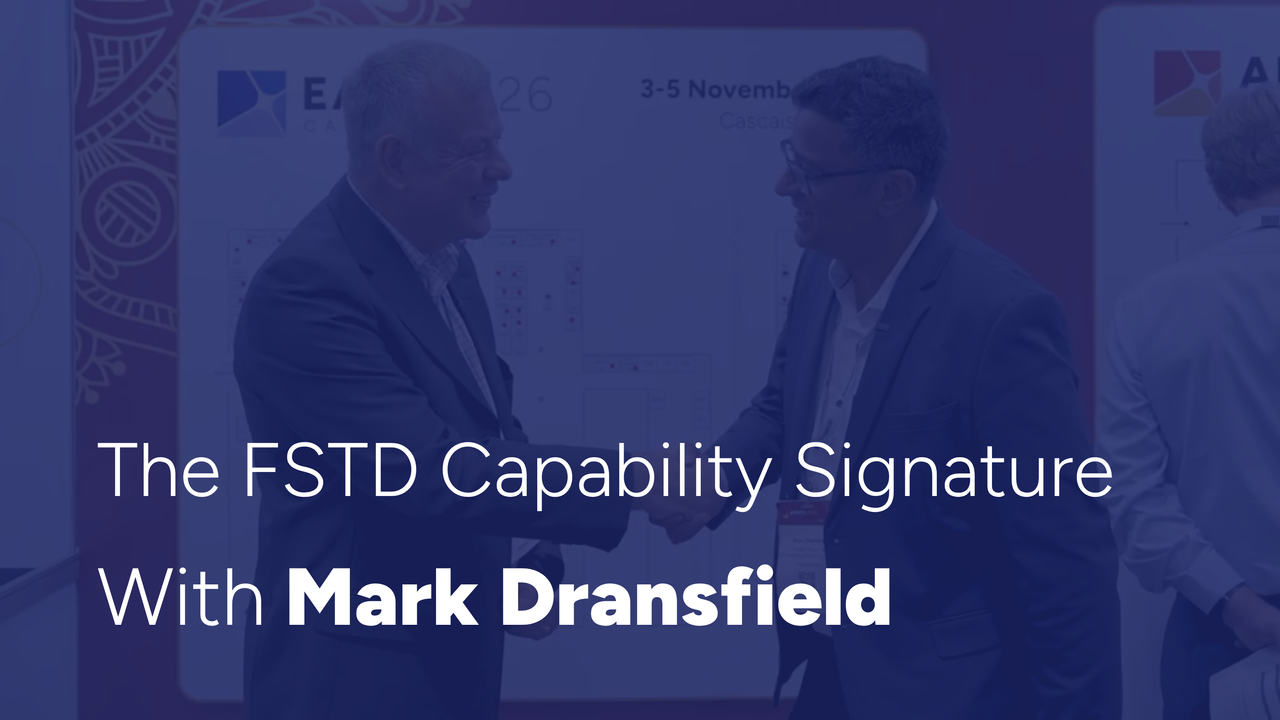 EASA's Simulator Capability Signature Gets a Panel Slot as a Bridge to CBTA and EBT
New AI Tool Flags Moments in Simulator Sessions for Instructors to Review — Not to Score
AviatePro Services and simulator manufacturer Simnest Group have developed an AI-assisted training-review tool called Simvidence that analyses pilot behaviour during simulator sessions — tracking facial movement, voice tone, gaze, head orientation and head-movement speed — to flag moments that deviate from an individual pilot's own established baseline for closer review during debriefing. Crucially, the system is explicitly designed not to score or grade pilot competency itself; AviatePro founder and chief executive Krisztian Makai said plainly that "AI should support the instructor's judgement, not replace it or determine competency grades," positioning Simvidence's output as discussion prompts for instructors rather than automated verdicts. Makai described the tool's function with a similarly modest framing, saying "we don't want to provide mind reading. We're just reading the signs," emphasising that instructors retain full responsibility for actual assessment. Simnest Group, which combines a flight-simulator manufacturing arm with its own pilot academy training roughly 800 cadets annually, is using the tool within its own training operations as both a proving ground and a data source. The companies said their longer-term goal is to collect a million hours of simulator training data to validate and refine what the system flags, an approach the announcement compared to 19th-century physician Carl Wunderlich's methodical body-temperature research establishing what counts as a normal baseline before abnormalities can be meaningfully identified.
Simvidence, built by AviatePro and simulator maker Simnest, analyzes facial movement, voice and gaze during training sessions to surface behavioral deviations worth discussing. Its creators are explicit that it's meant to support instructor judgment, not replace competency grading.
Original reporting
Halldale · Emma Vandore
Related in Training
Training
Halldale and T-C-Alliance are launching SCOPE, a two-day implementation workshop before EATS 2026, while the maintenance stream covers competency-based and digital CBTA delivery. Part-IS is the worked example for fitting new rules into training.
19 Oct 2026 · 1 min read
Source: Halldale· Emma Vandore
Training
EASA has issued an October 2026 revision of its consolidated Aircrew rules, incorporating amended requirements for flight simulation training devices and new material on devices carrying a capability signature. A gyroplane licensing decision is also included.
16 Oct 2026 · 1 min read
Source: EASA
Training
An Amris Aviation and Halldale report finds 44% of AI initiatives in aviation training target competency assessment and performance analytics under EBT and CBTA. Governance lags: 89% plan human override, yet under half have a named business sponsor.
15 Oct 2026 · 1 min read
Source: Halldale
Training
An APATS interview with consultant Mark Dransfield previews a EATS 2026 session on EASA's FSTD Capability Signature. It would qualify simulators by the tasks they can support rather than by fixed device labels, starting in 2028.
13 Oct 2026 · 1 min read
Source: Halldale Group
Latest in Training
01
02