
Training Read at source ↗
 New SCOPE Workshop and EATS Maintenance Stream Tackle How to Train More Engineers Without Cutting Safety CornersEASA Folds New Simulator Rules and Task-to-Tool Provisions Into Its October Aircrew Rulebook
 Survey of European Training Leaders: AI Interest Centres on EBT and CBTA Assessment, but Few Projects Have Named Sponsors
 EASA's Simulator Capability Signature Gets a Panel Slot as a Bridge to CBTA and EBT
APATS 2026's second day pushes competency-based pilot training from theory toward daily practice
Halldale
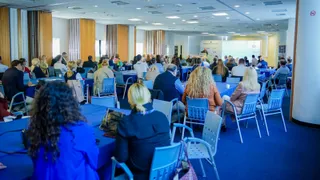
The second day of the Asia Pacific Aviation Training Summit (APATS) 2026 focused on turning training-industry ideas into practice across five parallel streams covering pilots, training organisations, cabin crew, maintenance and simulator regulation. The event's first-ever Flight Simulation Training Device Operator stream, built around EASA's new FSTD Capability Signature framework, drew 75 participants and was judged a strong start by moderator Mark Dransfield. In the pilot stream, speakers Thomas Bessière and Captain Sander van Bergen discussed connecting Competency-Based Training and Assessment to airlines' training and safety-management systems rather than running it as a standalone exercise, with van Bergen arguing that "the competency framework is providing currency to the safety language." Cédric Coffignal added that vague course design is often the real source of inconsistent assessment outcomes, not the instructors marking them. AI-assisted review tools also featured, with AviatePro demonstrating computer-vision software meant to support instructor debriefing without replacing instructor judgment on the actual assessment. Elsewhere, Aleksandra Kapela covered using behavioural and psychometric assessment to spot cabin-crew leadership potential beyond obvious signs, while Laura Diedrich discussed adapting maintenance training to a generationally mixed workforce across Asia-Pacific's growing MRO sector. Sessions on virtual and mixed reality described VR increasingly handling familiarisation and procedural practice, leaving full-flight simulator time free for more advanced flying scenarios. APATS returns to Bangkok again next year, on 25-26 August 2027.
Sessions at the Asia Pacific Aviation Training Summit covered folding CBTA into airlines' existing safety and training-management systems, AI-assisted debriefing tools, and using VR to free up simulator time for advanced scenarios. A new regulatory stream on simulator qualification drew 75 participants in its first year.
Original reporting
Halldale (Civil Aviation Training magazine) · Emma Vandore, Atul Chandra
Related in Training
Training
Halldale and T-C-Alliance are launching SCOPE, a two-day implementation workshop before EATS 2026, while the maintenance stream covers competency-based and digital CBTA delivery. Part-IS is the worked example for fitting new rules into training.
19 Oct 2026 · 1 min read
Source: Halldale· Emma Vandore
Training
EASA has issued an October 2026 revision of its consolidated Aircrew rules, incorporating amended requirements for flight simulation training devices and new material on devices carrying a capability signature. A gyroplane licensing decision is also included.
16 Oct 2026 · 1 min read
Source: EASA
Training
An Amris Aviation and Halldale report finds 44% of AI initiatives in aviation training target competency assessment and performance analytics under EBT and CBTA. Governance lags: 89% plan human override, yet under half have a named business sponsor.
15 Oct 2026 · 1 min read
Source: Halldale
Training
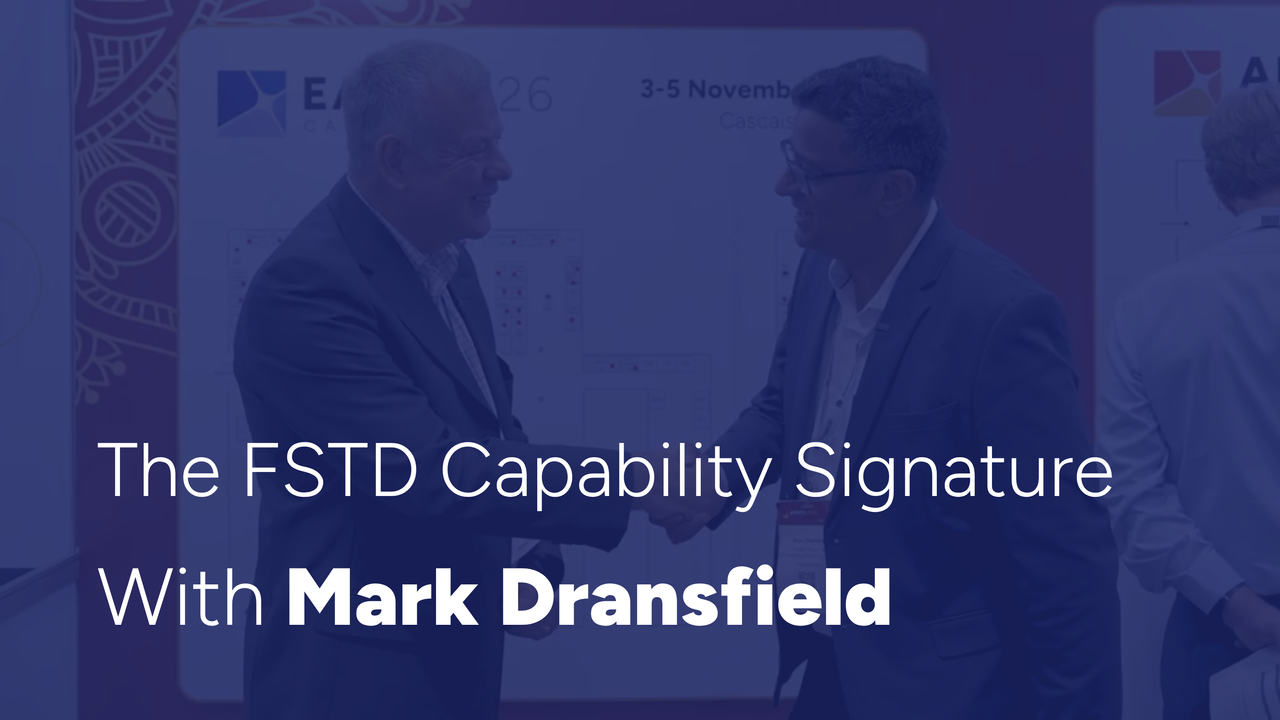
An APATS interview with consultant Mark Dransfield previews a EATS 2026 session on EASA's FSTD Capability Signature. It would qualify simulators by the tasks they can support rather than by fixed device labels, starting in 2028.
13 Oct 2026 · 1 min read
Source: Halldale Group
Latest in Training
01
02